
Couples in long-distance relationships often rely on digital communication to maintain emotional connection. However, meaningful occasions like Valentine’s Day can be difficult to celebrate when partners are physically apart.
Digital Valentine is a web-based experience that allows users to create personalized digital love letter pages for their partners. Instead of sending a simple message or generic greeting card, users can share a custom interactive page that reveals a heartfelt message and hidden surprises.
The goal was to design an experience that transforms a simple Valentine message into a memorable digital moment.

Validated demand for personalized digital love experiences
Enabled users to send unique Valentine pages to their partners remotely
Demonstrated the viability of a lightweight digital product for emotional storytelling
Valentine’s Day can be especially challenging for couples in long-distance relationships, where celebrating meaningful moments together is not always possible.
Digital Valentine's Card is a web-based interactive love letter experience designed to help couples express affection in a more personal and memorable way. Instead of sending a simple text or greeting card, users share a personalized page that unfolds as a digital love letter with messages, visuals, and interactive elements.
To validate the concept quickly, the product was launched as a concierge MVP. Users submitted their details and message, after which I manually generated personalized pages using Framer and shared the unique links with them.
During the launch, 24 users purchased personalized pages, demonstrating early demand for meaningful digital gestures designed for special occasions.
I worked as the Product Designer, responsible for:
• Product concept and strategy
• User experience design
• Interface design
• Interaction design
• Prototyping and testing
• Building the live experience in Framer
The project focused on solving three key goals:
Help long-distance couples express affection more meaningfully
Transform simple Valentine messages into memorable experiences
Validate demand for personalized digital love pages
The product needed to launch quickly before Valentine’s Day, which required prioritizing speed of validation over technical automation.
Instead of building a complex dynamic system, I used a manual page creation workflow in Framer to generate personalized pages for each user request. This approach allowed the concept to be tested and delivered quickly while gathering early feedback from users.
For couples in long-distance relationships, maintaining emotional connection requires intentional digital communication.
However, most digital expressions of affection today feel generic and routine. Common options include copying pre-written messages, sending emojis, or sharing static greeting cards.
While convenient, these interactions rarely create memorable moments, especially during meaningful occasions like Valentine’s Day.
Through conversations with friends and peers in long-distance relationships, several common frustrations emerged:
• Writing heartfelt messages can feel difficult or awkward
• Most Valentine messages online feel generic or impersonal
• Sending a simple text message doesn’t feel special enough for the occasion
Because distance removes the ability to celebrate physically, digital gestures carry greater emotional importance. Yet the tools available for expressing affection digitally remain limited.
Existing Valentine solutions typically focus on static greeting cards or templated messages.
They rarely create immersive or personalized experiences that make the recipient feel truly special.
This creates an opportunity to design a product that helps users turn a simple message into a personalized digital experience that feels thoughtful and memorable.

How might we help couples in long-distance relationships create meaningful and memorable digital gestures that make their partner feel special, even when they are physically apart?
To better understand how couples express affection digitally, I conducted informal user conversations and behavioral observations leading up to Valentine’s Day.
The primary audience that emerged from these conversations was couples in long-distance relationships, where digital communication plays a central role in maintaining emotional connection.
Unlike couples who can celebrate physically together, long-distance partners rely heavily on messages, calls, and online gestures to create meaningful moments.
However, many of these interactions still feel predictable and repetitive, especially during special occasions.
To explore this space further, I conducted:
• Informal conversations with individuals in long-distance relationships
• Observations of how people share Valentine messages on social platforms
• Review of existing digital greeting card platforms
These helped identify how people currently express affection digitally and where opportunities for improvement exist.
Digital gestures carry greater emotional weight in long-distance relationships
For couples separated by distance, even small gestures such as a thoughtful message or surprise link can have a significant emotional impact.
Many participants admitted they struggled to write heartfelt messages and often relied on copying pre-written messages online.
Most existing solutions like Canva templates produce static messages or images, which fail to create memorable experiences for the recipient.
Since many couples communicate through apps like WhatsApp, any solution needed to be easy to share through a simple link.
Long-distance couples want to create meaningful digital moments, but existing tools rarely support this need.
This insight highlighted an opportunity to design an experience that transforms a simple message into a personalized digital love story.
After identifying long-distance couples as the primary audience, I created a persona to better understand their motivations, frustrations, and communication behaviors.

Daniel and Ada have been in a long-distance relationship for over a year. Because they cannot meet frequently, most of their communication happens through messaging apps and video calls.
Special occasions such as birthdays, anniversaries, and Valentine’s Day are particularly important to them because these moments help strengthen their emotional connection despite the distance.
However, expressing affection digitally often feels limited and repetitive. Sending simple text messages or copied romantic quotes does not always feel meaningful enough for special moments.
• Express affection in a thoughtful and memorable way
• Surprise their partner with meaningful gestures
• Make special occasions feel more personal despite the distance
• Struggling to write heartfelt messages
• Generic Valentine messages feel impersonal
• Digital greetings often feel temporary or forgettable
• A simple way to create personalized romantic gestures
• An experience that feels special rather than routine
• Something easily shareable through messaging platforms
For couples in long-distance relationships, small digital gestures often carry significant emotional value.
Designing experiences that feel personal and intentional can help strengthen emotional connection even when partners are physically apart.
To test whether people would actually value this idea, I launched the concept as a concierge MVP.
Users submitted their details and I manually generated personalized pages using Framer, allowing me to validate demand before building a scalable system.
During the launch period:
24 users requested personalized Valentine pages for their partners.
This early adoption confirmed that there was genuine interest in creating personalized digital gestures for special occasions.
Based on the research insights and early validation, the design approach focused on creating an experience that was emotionally meaningful while requiring minimal effort from users.
Because the primary audience consisted of couples in long-distance relationships, the product needed to emphasize personalization, emotional storytelling, and effortless sharing.
From the insights gathered, three guiding design principles were defined.
Generic greeting cards were one of the biggest frustrations identified during research.
Instead of rigid templates, the experience needed to feel personal and intentional, allowing each message to directly reflect the sender’s feelings for their partner.
Rather than presenting a static message, the experience was designed to feel like a small digital journey.
The page gradually reveals the message and visual elements, creating a moment of emotional anticipation for the recipient.
Writing romantic messages can be intimidating, and overly complex tools can discourage users from creating something meaningful.
The experience was therefore designed so users only needed to provide a few personal details and their message, after which the personalized page would be generated and shared with them.
This approach allowed users to send a thoughtful digital gesture without needing to design or configure anything themselves.
Since most couples communicate through messaging platforms like WhatsApp, the final experience needed to be easily shareable through a simple link.
This ensured the experience fit naturally into users’ existing communication habits.
To ensure the experience was simple and meaningful, the product journey was designed around a low-effort request process for the sender and an emotionally engaging experience for the recipient.
Since the product was launched as a concierge MVP, the page creation process was handled manually behind the scenes while the focus remained on delivering a polished final experience.
Sender Journey

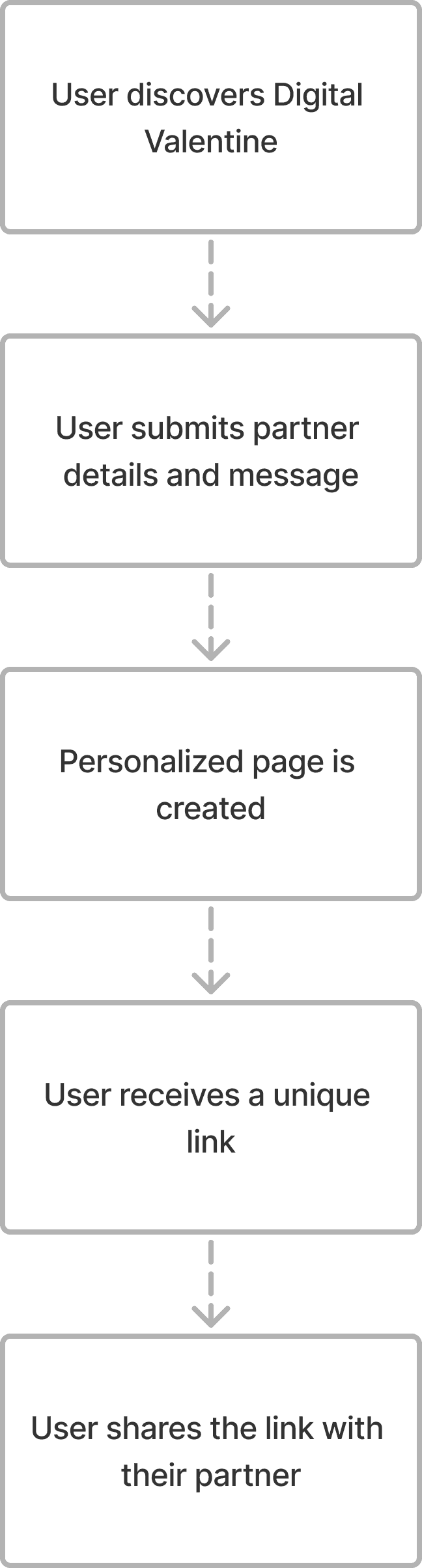
Recipient Journey

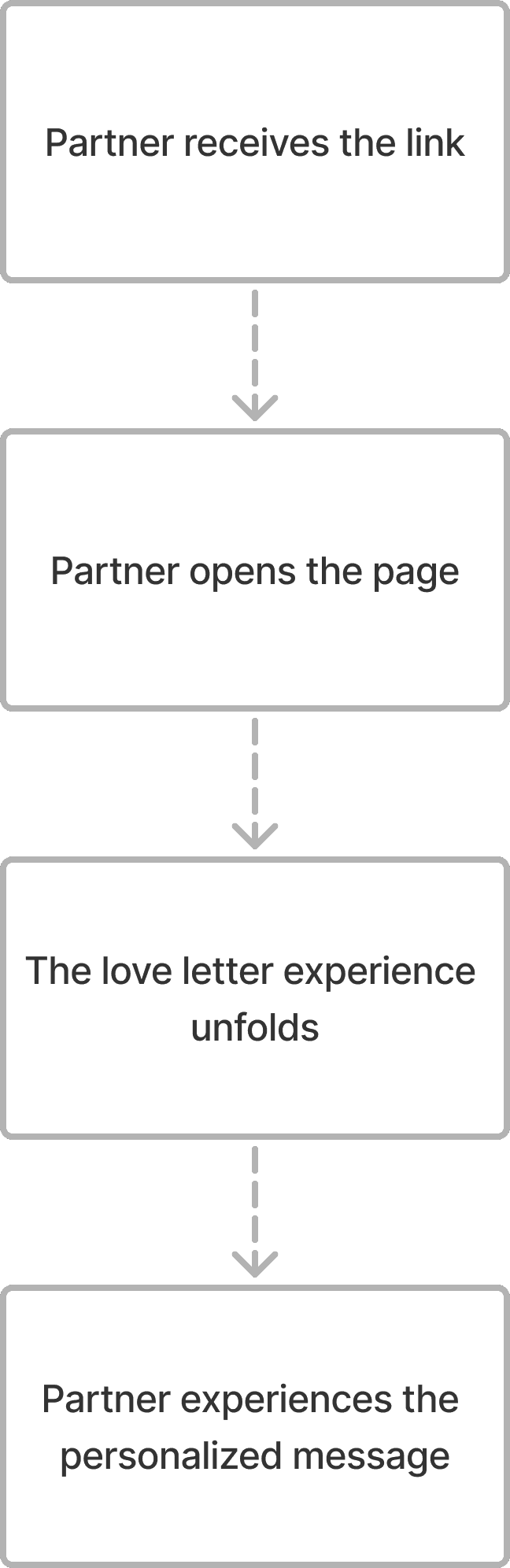
Based on the research insights and design strategy, the final solution was an interactive digital love letter experience designed for couples in long-distance relationships.
Instead of sending a simple text message or static greeting card, users send a personalized web page that unfolds like a digital love letter, gradually revealing messages, visuals, and emotional moments.
The experience was designed as a guided emotional journey, allowing the recipient to progress through different moments of the message rather than viewing everything at once.
This structure helps create anticipation, engagement, and emotional impact, similar to opening and reading a physical love letter.
To support this narrative experience, the page was divided into several stages that guide the recipient through the message.
Each stage was designed to serve a specific emotional purpose:
Personalized entry to capture attention and build anticipation
Opening message to set the emotional tone
Interactive discovery revealing hidden reasons for love
Voice message introducing a deeper emotional layer
Final declaration providing closure
Together, these stages transform a simple message into a memorable digital storytelling experience.
Each page is customized using the sender’s message, photos, and audio.
Addressing the recipient directly helps the experience feel intentional and intimate, which was especially important for couples celebrating Valentine’s Day while physically apart.
The experience is delivered through a unique web link, allowing users to easily send the page through messaging platforms like WhatsApp.
Recipients can open the page instantly without needing to download an app or create an account.
Because Framer does not yet support dynamic template personalization, each page was generated manually based on user submissions.
This concierge MVP approach allowed the concept to be launched quickly and tested with real users before investing time into building a fully automated system.
Although the workflow was manual behind the scenes, the focus was on delivering a seamless and emotionally engaging experience for the recipient.
Personalization
Shared Memories
Interactive Hidden Messages
Voice note / Romantic Music
The experience progresses like a story, increasing intimacy section by section.
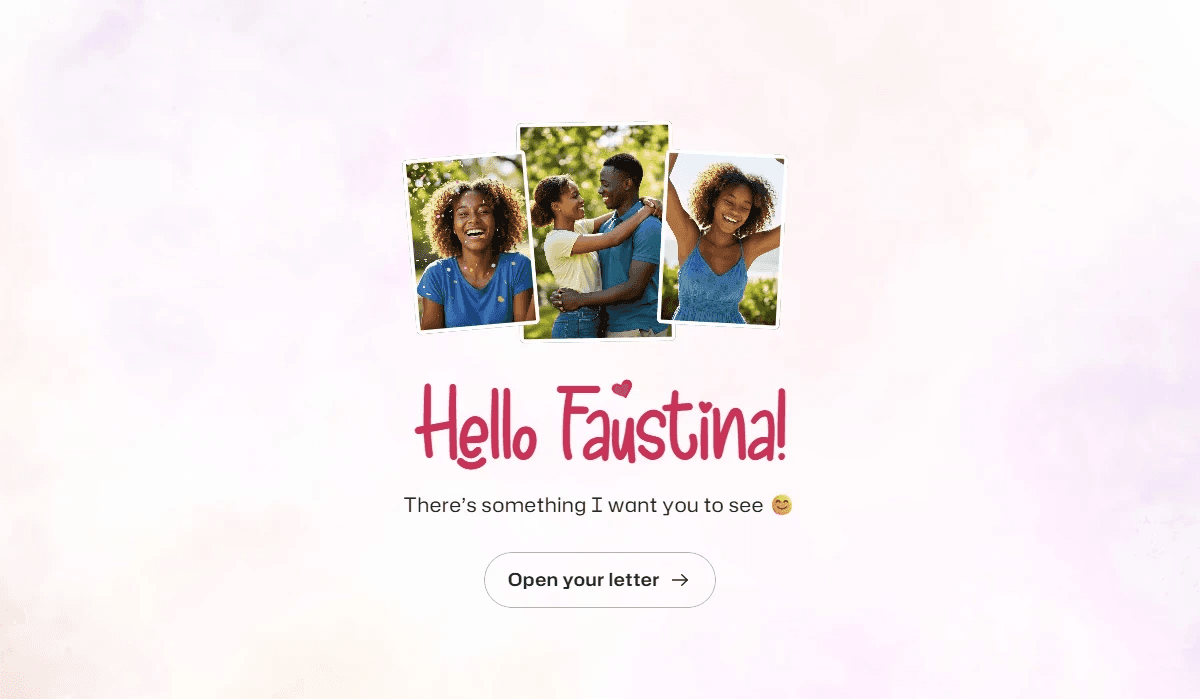
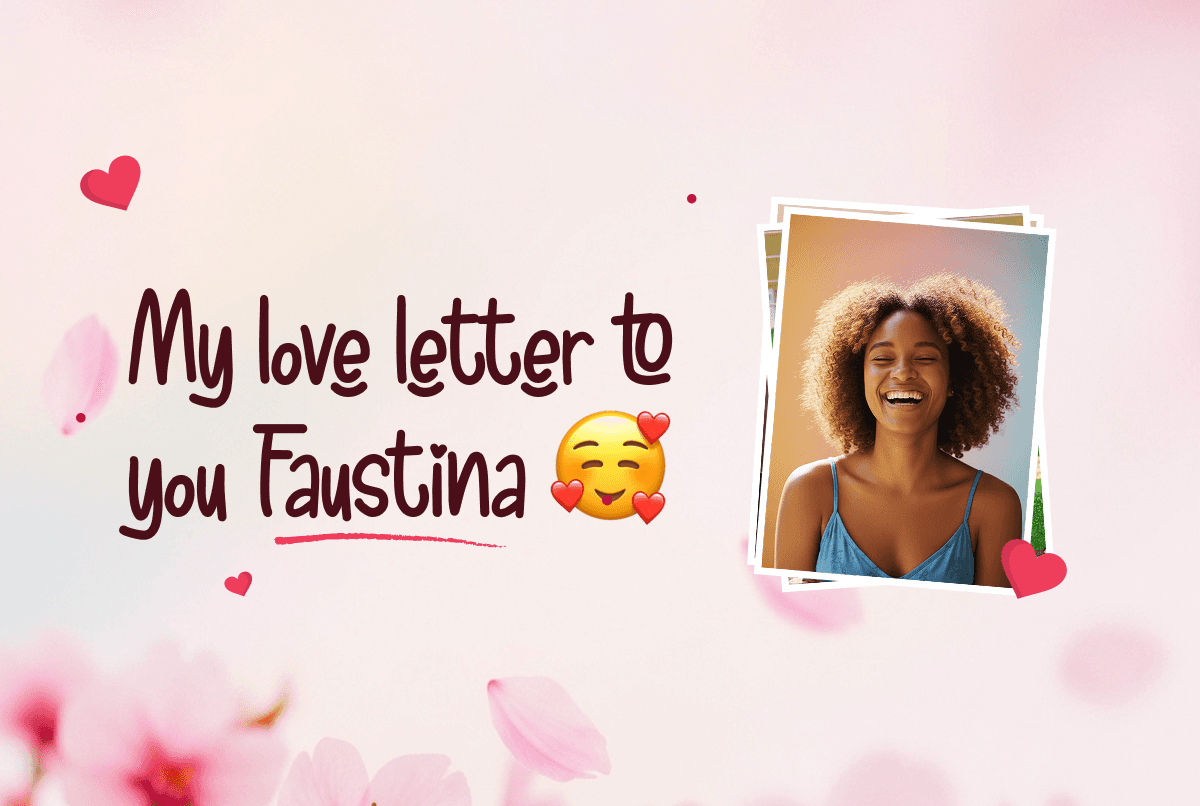
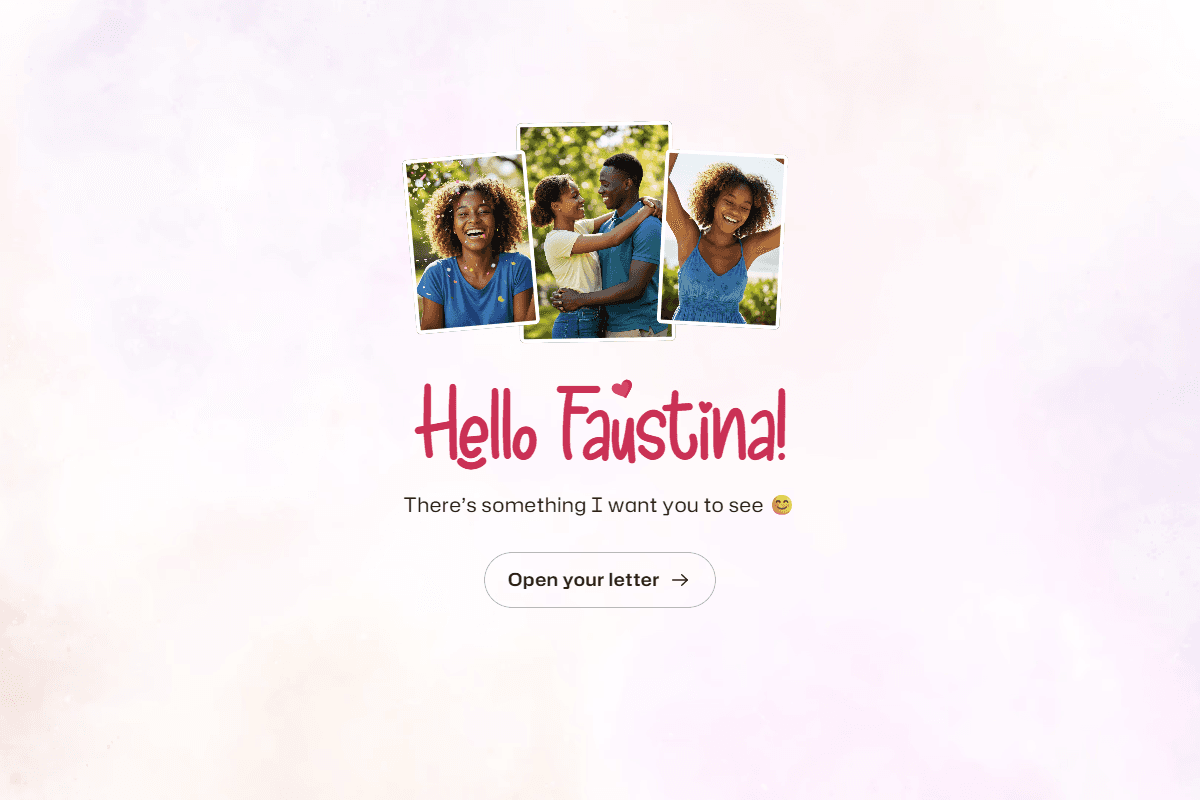
The experience begins with a personalized greeting addressed directly to the recipient.
The page displays the partner’s name alongside a collage of shared photos, immediately signaling that the message was created specifically for them.
Instead of revealing the entire message immediately, the page invites the recipient to open the letter, introducing a moment of anticipation.
From a design perspective:
• The layout is centered and minimal to focus attention
• The greeting feels warm and personal
• The call-to-action invites interaction
This entry point sets the emotional tone for the experience before the message unfolds.

After entering the experience, the recipient is introduced to the beginning of the love letter.
The phrase:
“Before you scroll… know this comes from my heart.”
was intentionally designed to slow the interaction and encourage the recipient to pause before continuing.
Soft visuals and imagery reinforce the emotional tone while transitioning into the deeper message.
This moment marks the beginning of the emotional narrative.
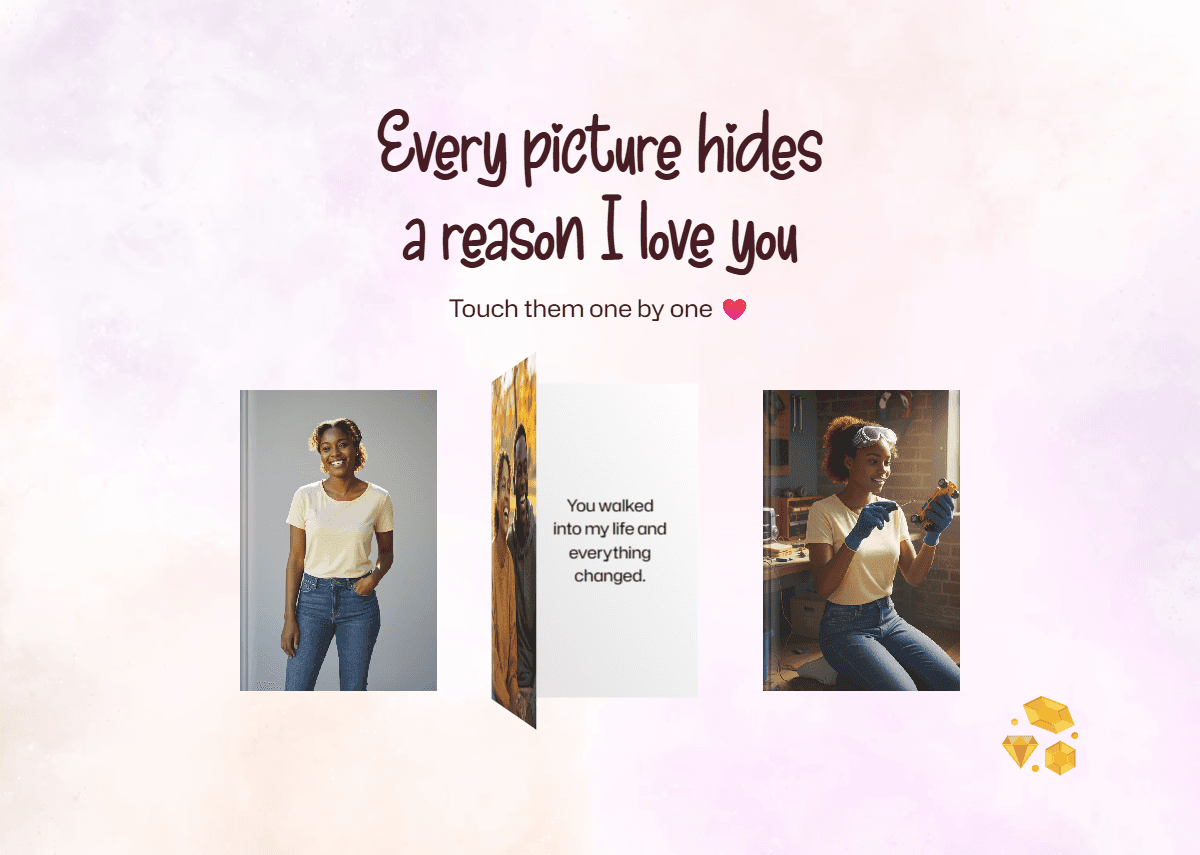
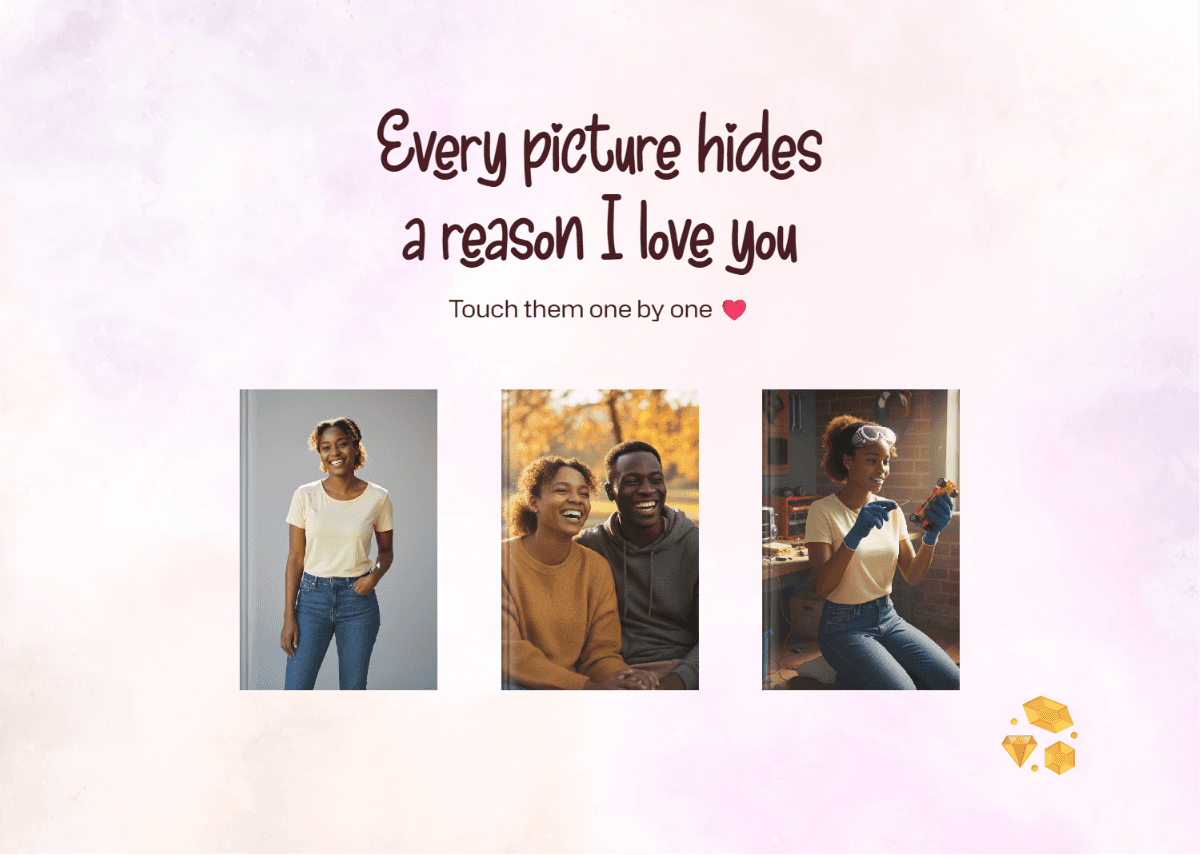
The next section introduces interactive discovery.
Photos appear on the screen, each hiding a personal message written by the sender.
• On desktop, hovering over images reveals the message
• On mobile, tapping reveals the hidden note
Instead of reading everything at once, recipients uncover the reasons they are loved one interaction at a time.
This design transforms the message into a participatory experience, making the interaction feel more personal and memorable.
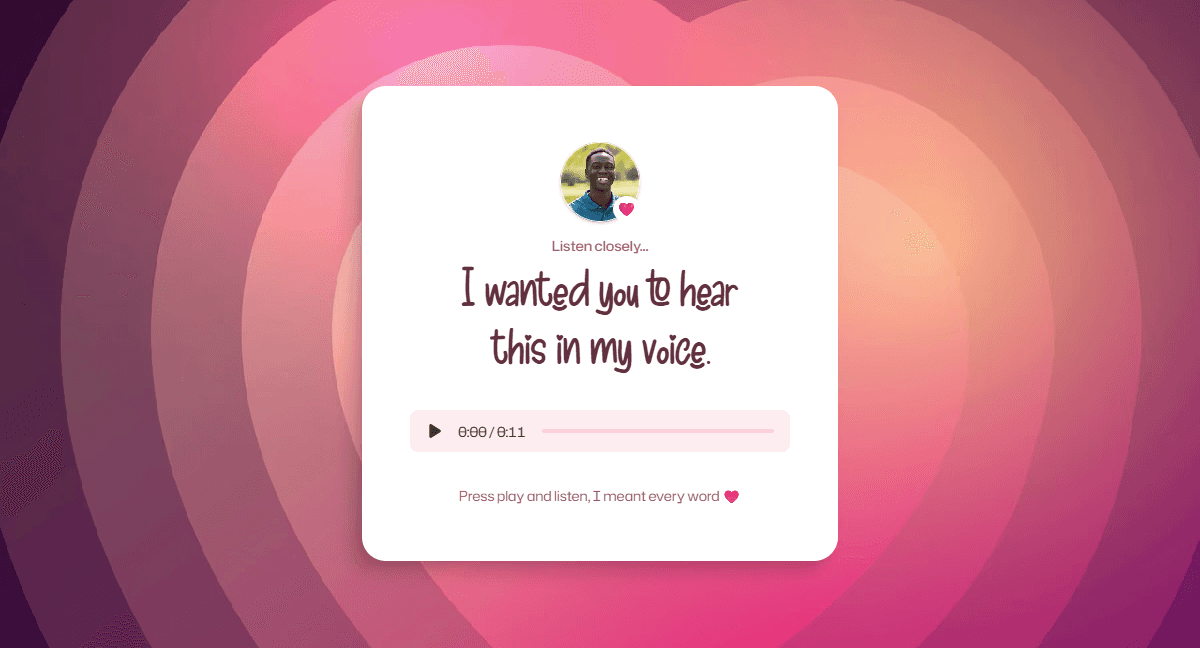
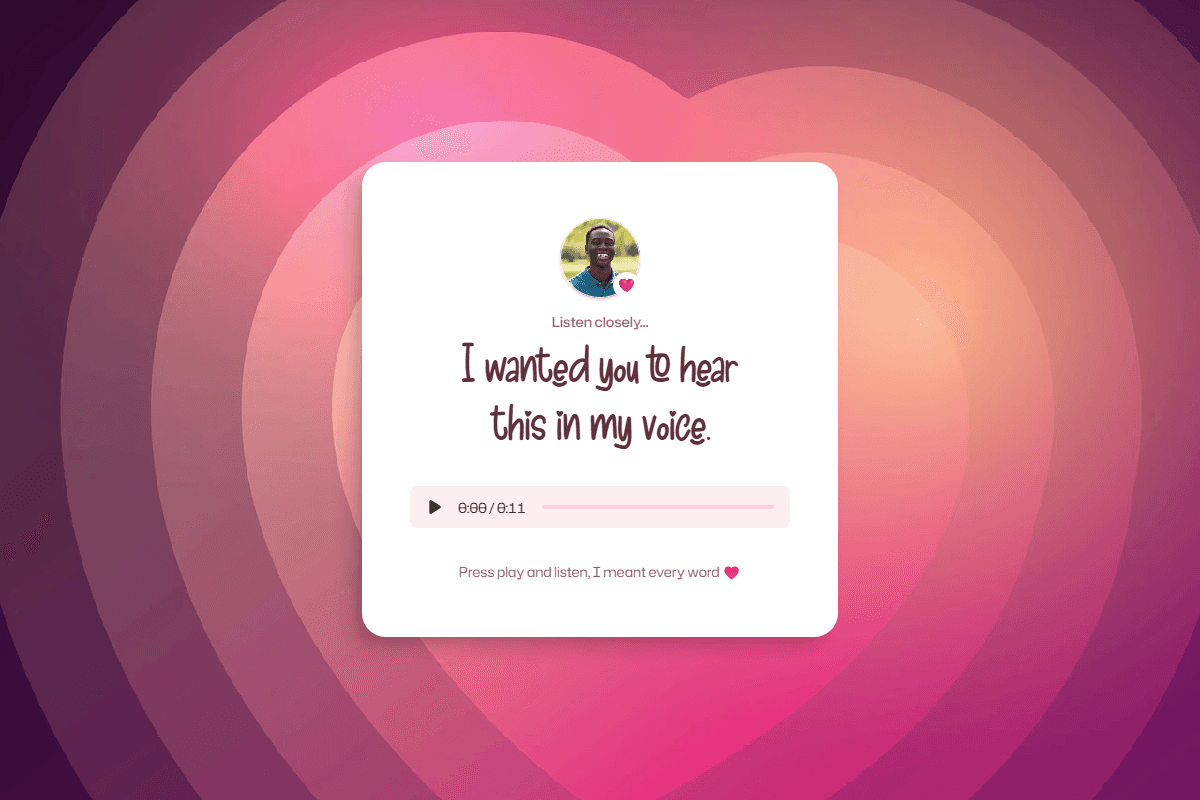
The experience reaches its emotional peak with an embedded voice message.
Here, the sender can include a voice recording or chosen audio message that plays directly within the page.
For couples in long-distance relationships, hearing a partner’s voice creates a level of emotional connection that text alone cannot achieve.
This section introduces a deeper layer of intimacy within the experience.
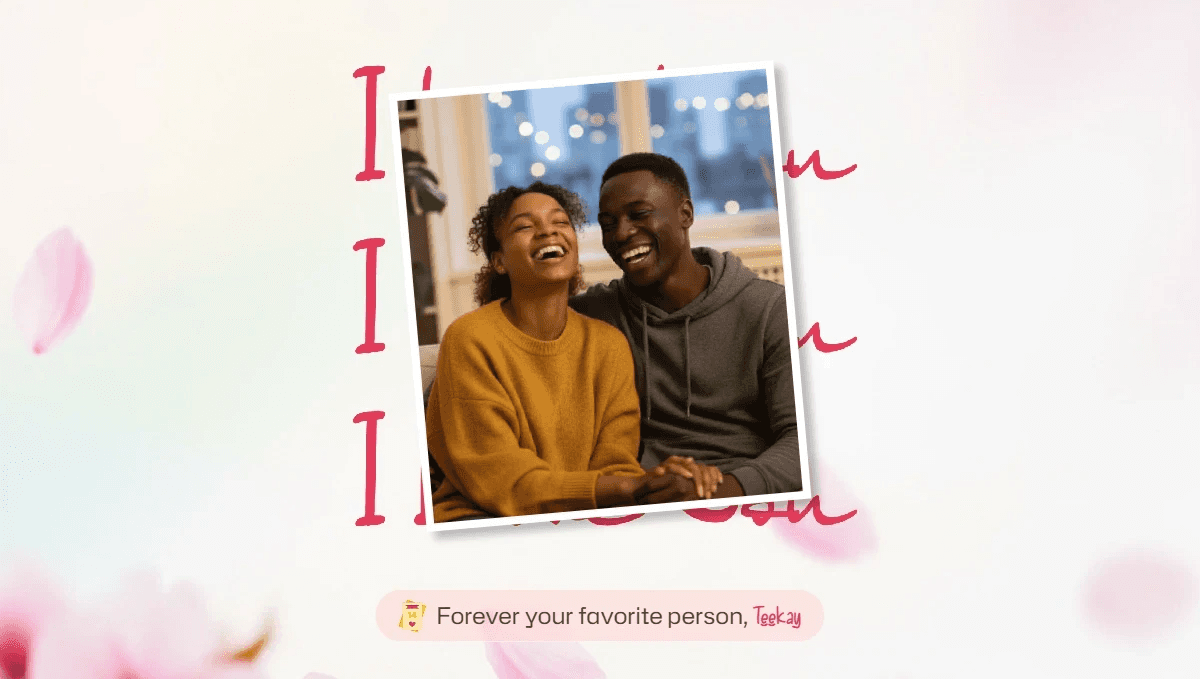
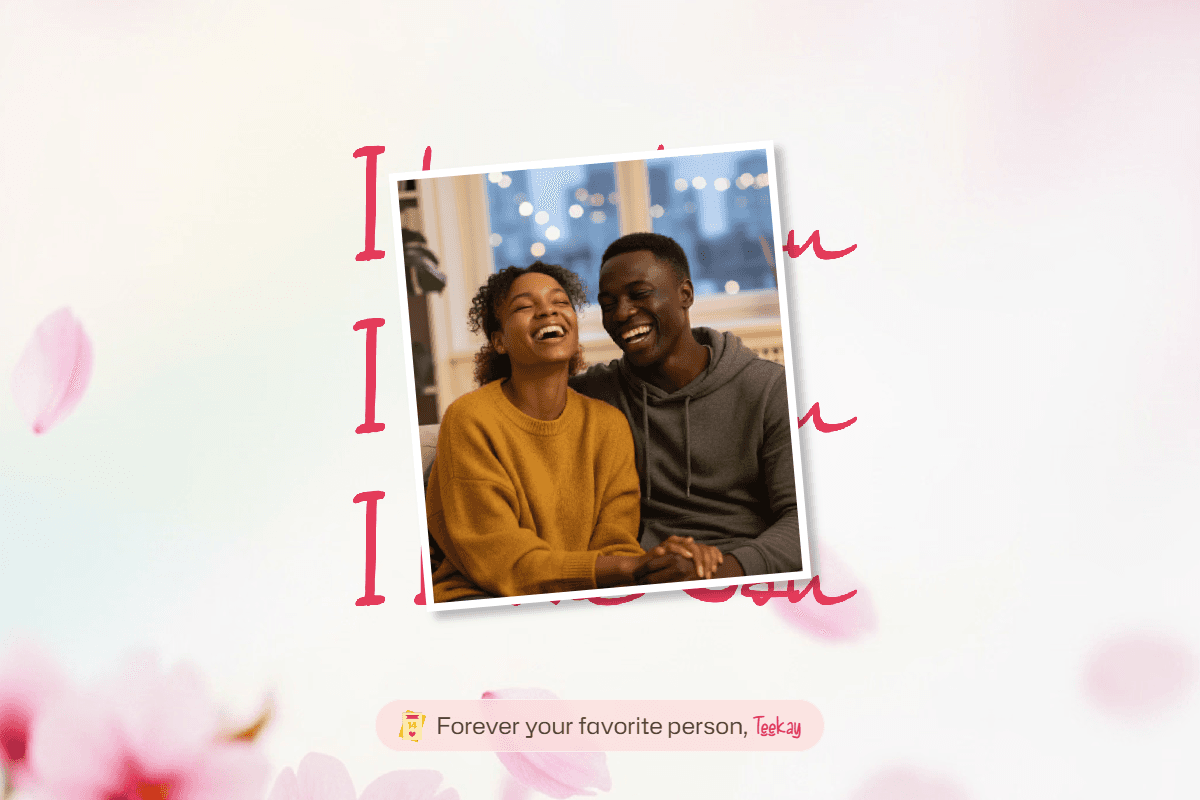
"I Love You"
The experience concludes with a final declaration of love accompanied by a photo and closing message.
Large typography and minimal layout allow the message to stand as the emotional conclusion of the journey.
This final moment provides clear emotional closure, leaving the recipient with a lasting impression of the message.
To evaluate whether the concept resonated with users, the product was launched as a concierge MVP ahead of Valentine’s Day. Instead of building a fully automated system, personalized pages were created manually in Framer based on user submissions.
This allowed the core experience to be tested quickly with real users while validating whether people valued personalized digital love letters.
During the launch period:
24 users requested personalized Valentine pages for their partners.
Most requests came from individuals in long-distance relationships, confirming that the product addressed a genuine need for meaningful digital gestures when physical presence was not possible.
Each personalized page was offered at ₦10,000 (~$6–7).
Despite the manual creation process, users were willing to pay for the experience, demonstrating that people value thoughtful and personalized digital gestures for special occasions.
This early traction generated:
₦240,000 in revenue from 24 orders.
The willingness of users to pay for the experience provided strong validation that the concept could potentially evolve into a scalable digital product.
Users shared the personalized pages directly with their partners through messaging platforms such as WhatsApp.
Because the experience was delivered through a simple link, recipients could access the page instantly without downloading an app or creating an account.
This frictionless sharing approach helped the experience fit naturally into existing communication habits.
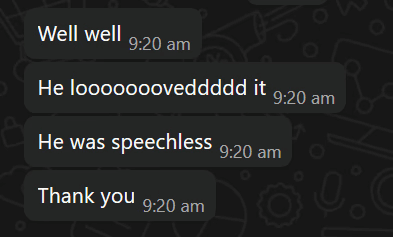
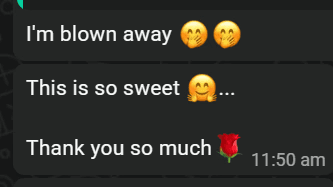
Feedback from users highlighted the emotional impact of the experience.
Some of the responses included:
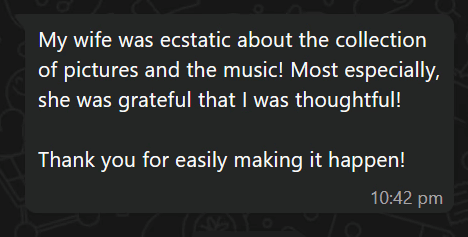
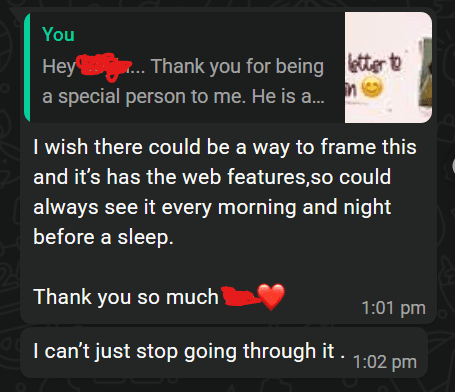
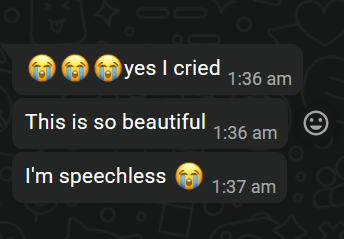
The voice message section was also particularly meaningful for couples in long-distance relationships, as hearing a partner’s voice added a deeper layer of emotional connection.
The experiment validated three important assumptions:
Although the current workflow relies on manual page generation, the early response suggests strong potential for a scalable automated version of the product.
Future iterations could explore:
Automated page generation
Customizable templates
AI-assisted message writing
Broader use cases beyond Valentine’s Day
Designing and launching Digital Valentine provided valuable insights into designing emotional digital experiences and validating product ideas quickly.
Although the project began as an exploration of how design could make digital messages more meaningful, launching the experience revealed several important lessons about user behavior, product validation, and design for emotion.
One key takeaway was the importance of pacing emotional experiences.
Instead of presenting the message immediately, structuring the experience into stages — anticipation, discovery, emotional peak, and closure — helped create a more memorable interaction.
This reinforced the idea that experience design is not just about visuals, but about guiding how users feel as they move through a product.
Launching the experience as a concierge MVP proved to be an effective way to test the concept quickly.
Instead of investing time in building a fully automated system, manually generating pages allowed the idea to be validated with real users in a short time frame.
This approach reinforced the value of testing demand before scaling product infrastructure.
If the product were developed further, several improvements could make the experience more scalable and flexible:
• Automated page generation
• User self-service customization
• AI-assisted message writing
• Expanded use cases for birthdays, anniversaries, and other special moments
These improvements would help transform the concept into a fully scalable product while preserving the emotional storytelling experience.