




The Problem
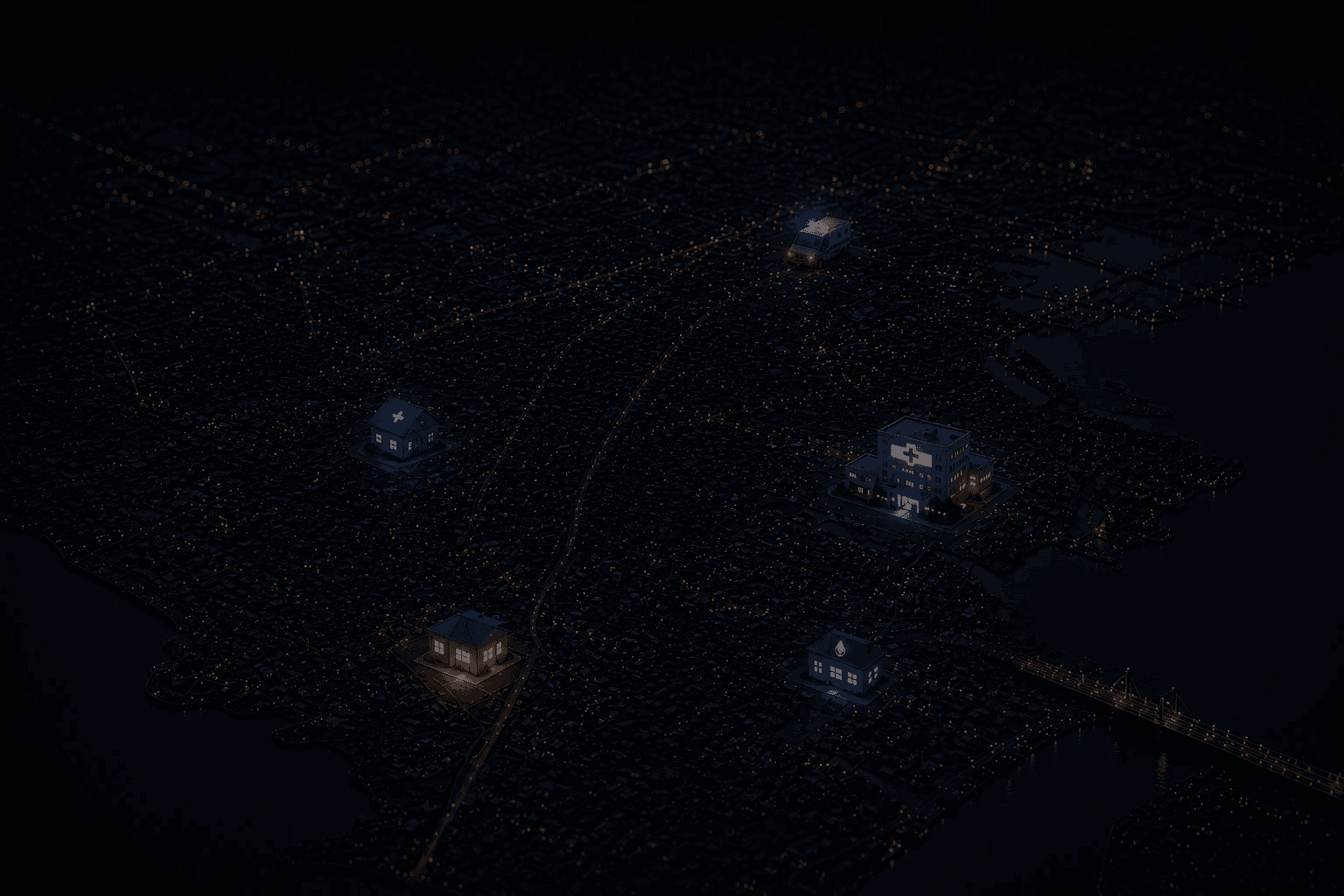
It's not that ambulances, hospitals, and trained personnel don't exist, it's that information about them is fragmented, infrastructure is underutilized, and there's no system connecting a person in crisis to the nearest resource that can actually help them. Over 45,000 medical and transport personnel across the continent are underpaid and underused simply because there's no platform routing work to them.
Eight Medical set out to build that platform. I was brought on as the lead product designer to give it a face.
About the Project
God's Eye is EightMedical's next-generation product currently in active development, not yet publicly launched. It is built to become the AI-powered search, triage, and transport layer beneath everything the company does. Once live, it will let anyone regardless of device or connectivity search for and book emergency resources: hospitals, ambulances, blood, oxygen, personnel, even credit to pay for care. A real query like "my mother is having chest pains" becomes a ranked set of facilities that can actually help, based on distance, specialty, availability and cost.
A real query — not a dropdown. AI maps the situation to specialties, equipment, and urgency before matching.
Match is by what a facility can actually treat, not just how close it is. Live bed & stock data feed the engine.
The same service surface across web, WhatsApp, voice and a USSD version that needs no internet at all.
A structured dataset of every emergency resource across every facility type readable by the AI layer.
Corporate and HMO deferred billing, so authorising emergency care never requires a card in the moment.
Ambulance pairing with a medic and pilot, tracked live from request through handover at the facility.
The Problem
Before any of this could be designed, I needed to understand how emergency admission actually happens on the ground.
1
Research
Shadowing how emergency admission actually happens on the ground, at Lagos State Teaching Hospital (LUTH).
2
Interviews
Doctors in charge of admissions, HMO operatives, facility staff. Who gets admitted where, and why.
3
Wireframes
Search, triage and booking flows mapped end-to-end before any visual polish.
4
Testing
Usability rounds on high-fidelity Figma prototypes, with real users.
5
Iteration
Feedback folded back into the design in tight loops weekly, not quarterly.
6
Prototype
Production-ready prototypes validated before a single line of production code.
The Pivot That Changed Everything
This single shift is the difference between a directory and a triage system. It's also, I think, the most consequential design decision I made on this project.
Our first version of the booking flow was simple, almost naively so: a user selects their health condition and location, and we recommend the nearest hospitals. They book ambulance transport if they want it. It felt clean. It also completely ignored the reality of an emergency.
What happens when the "closest" hospital has no ICU bed left? No blood bank stock for the transfusion the patient needs? Isn't equipped for the condition at all? Sending someone to the nearest hospital, full stop, can cost them their life just as easily as sending an ambulance.
"Nearest"
User picks condition + location. Platform returns the closest hospitals. User books an ambulance if they want one.
"Nearest-and-capable"
Hospitals publish live specialties, equipment, and bed availability by ward. AI engine only surfaces a facility if it can actually meet the emergency.
The Ecosystem
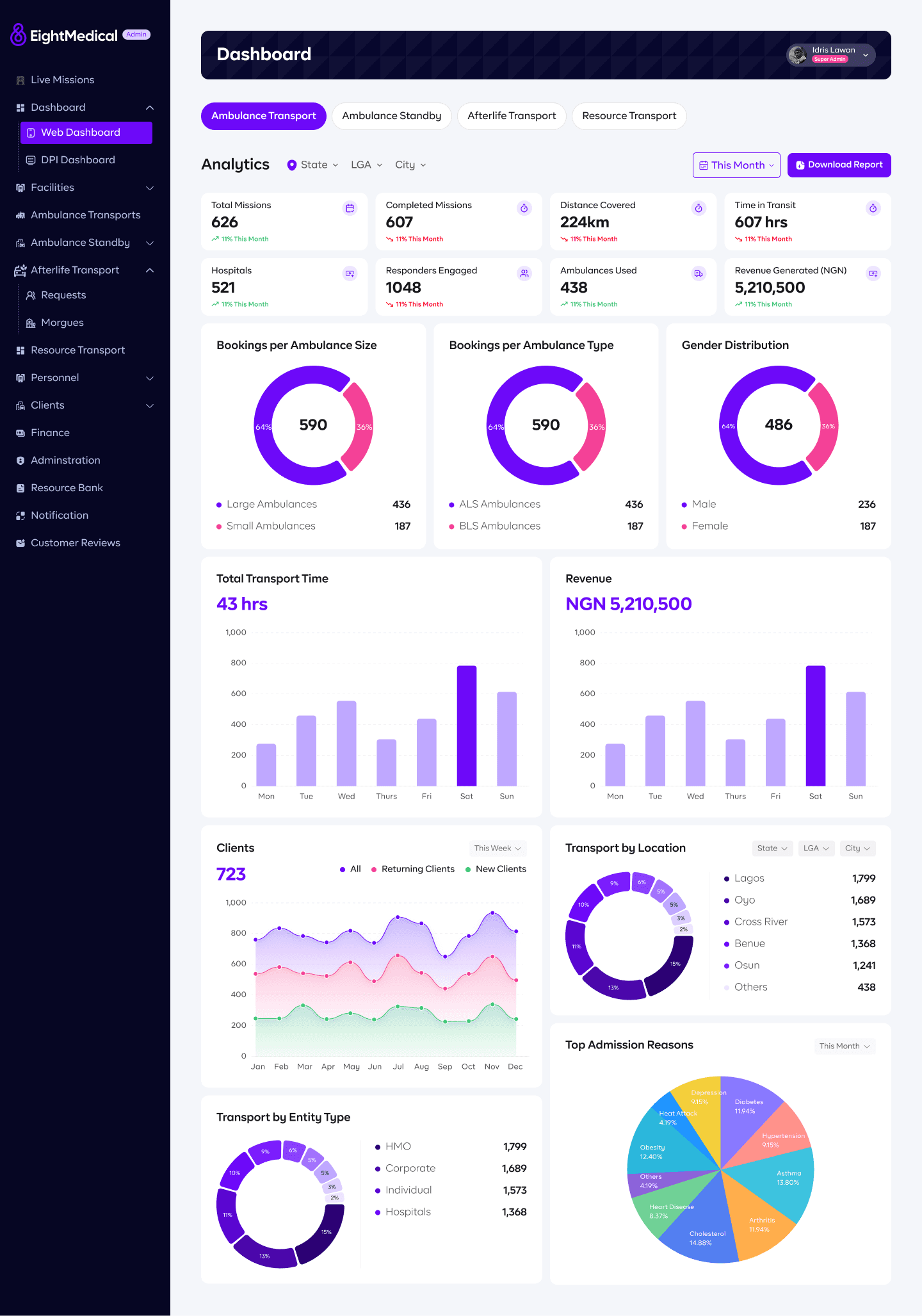
A patient searches and books. A hospital agent updates bed count and resource availability. An ambulance provider dispatches an ambulance, medics and pilot. A hospital admits and reconciles. An admin watches it all ready to intervene the moment something stalls.
Admin • The Central nervous system
Admin sits above all other roles — onboarding hospitals, monitoring every live mission on a map in real time, and holding unrestricted override authority to reassign an ambulance, escalate a case, or switch a payment mode mid-emergency. The dashboard had to make "what needs a human right now" instantly visible among hundreds of quietly-fine cases.
Live Tracking
If there's one surface that must behave identically — and simultaneously — across nearly every role, it's live transport tracking. Same mission, five emotional states, one shared truth
Getting the timing, notification logic and shared state right across that many views — on that many devices, for people in very different emotional states — was some of the most detailed interaction design work on the project. A ten-second discrepancy between what a patient sees and what a dispatcher sees isn't a bug; it's someone losing trust in the platform at the worst possible moment.
Taking It Offline
The hardest constraint wasn't technical. It was the absence of a screen.
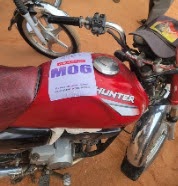
In Gombe State, most of the women we needed to reach didn't have internet access, and many were using basic feature phones. So alongside the core God's Eye product, I designed a USSD- and IVR-based version of the platform, delivered in Hausa and English, that lets a woman dial a short code to request transport for antenatal visits or obstetric emergencies — no app, no data, no login.
Every screen became a sentence. Every tap became a keypress. It's since become the world's first USSD-based ambulance booking service and notably, the first place any part of the platform I designed has actually gone live.
How it works
1
Dial the Emergency Code
Users dial the USSD emergency code (*347*269#) to start the ambulance booking process.
2
Select Location
Users choose their current Local Government Area (LGA) so the system can identify where assistance is needed.
3
Choose the Emergency Type
Users select the pregnancy-related emergency that best matches their situation.
4
Select an Ambulance Type
Users choose their preferred ambulance option, either a bus, bike or keke ambulance.
5
Choose a Destination Hospital
Users select the hospital where they want to receive maternal care.
6
Receive Booking Confirmation
A driver is assigned with SMS and voice confirmation.
Impact
None of this was designed in a vacuum
Before God's Eye, Eight Medical had already proven demand for the model through manual operations. That track record is the reason God's Eye exists to run at the speed and scale only software can provide.
Processed through manual and legacy operations before the platform.
Real transports, real patients — demand proven ahead of God's Eye.
Hospitals, pharmacies and blood banks in the network.
Medics, pilots and transport personnel routed by the platform.
Estimated lives saved to date across the Eight Medical network.
Average response time in the Gombe pilot — the product under real conditions.
Project Hauwa da Haulat runs on a scaled-down USSD version of God's Eye's own technology. Its results helped secure DPI-linked funding to expand the model — alongside a $52,000 World Bank–funded rollout into Edo, Kebbi and Adamawa States, and a €2,000 Social Impact Award.
3,000+
Pregnant women onboarded
500+
Trips facilitated
30+
Babies safely delivered


Recognition
The design of God's Eye earned industry recognition — and directly supported the organisation's funding.